
A Helpful Framework

When I sketch a chair, I am invariably doing so using 2 point perspective. I don’t usually take the time to actually draw out the perspective lines but I definitely intuit them and use them to help the structure of the image. One great lesson I’ve learned from all my years of drawing is this, a good structure carries the day. If all the details relate to each other in a way that visually makes sense, then they can be quite crude or barely there and they will still serve the purpose. Here is a drawing I made very quickly in which I did actually draw out the perspective lines (more on that later).
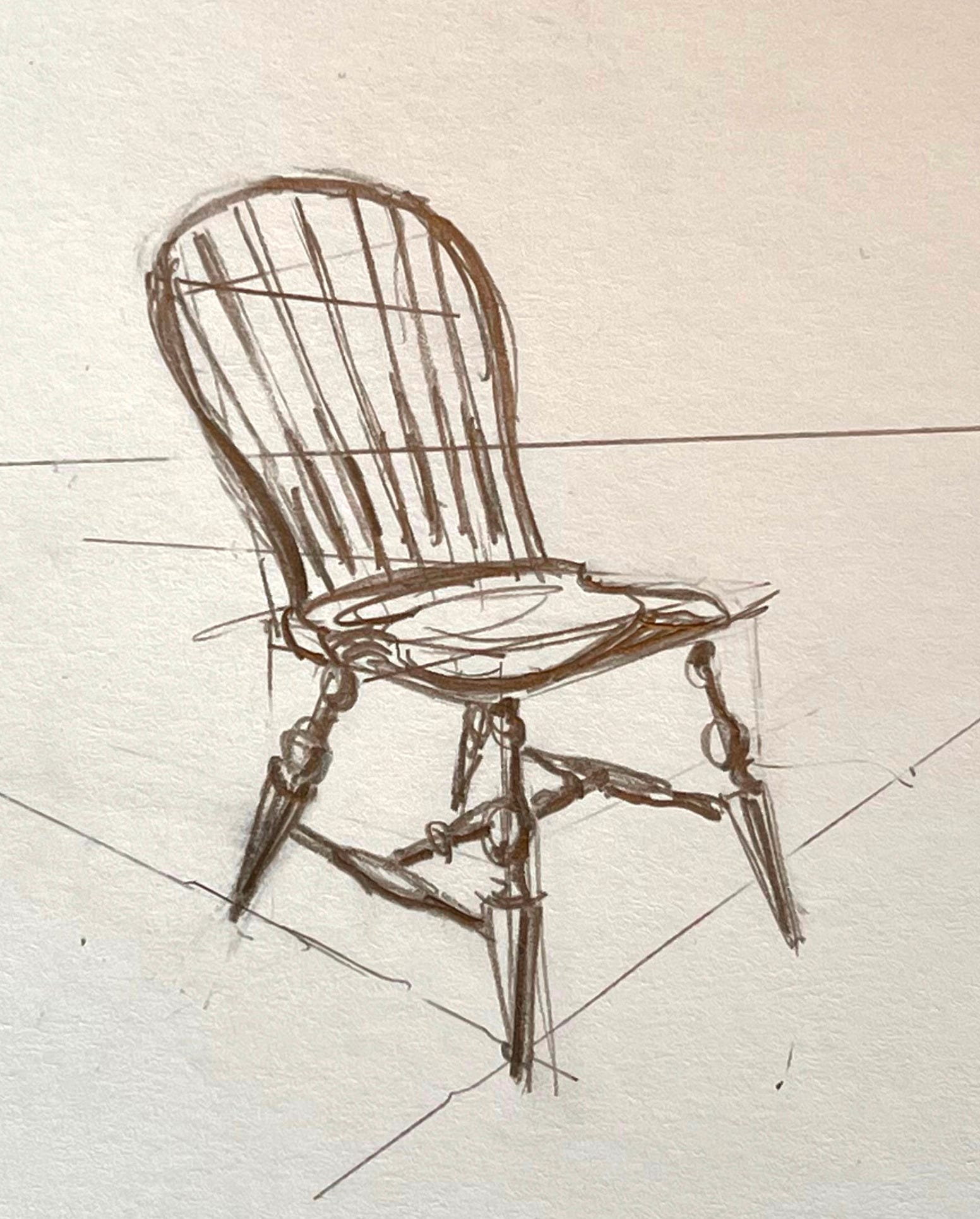
Clearly a rough sketch, but the position of the seat and legs look correct. I left the perspective lines on the floor plane.
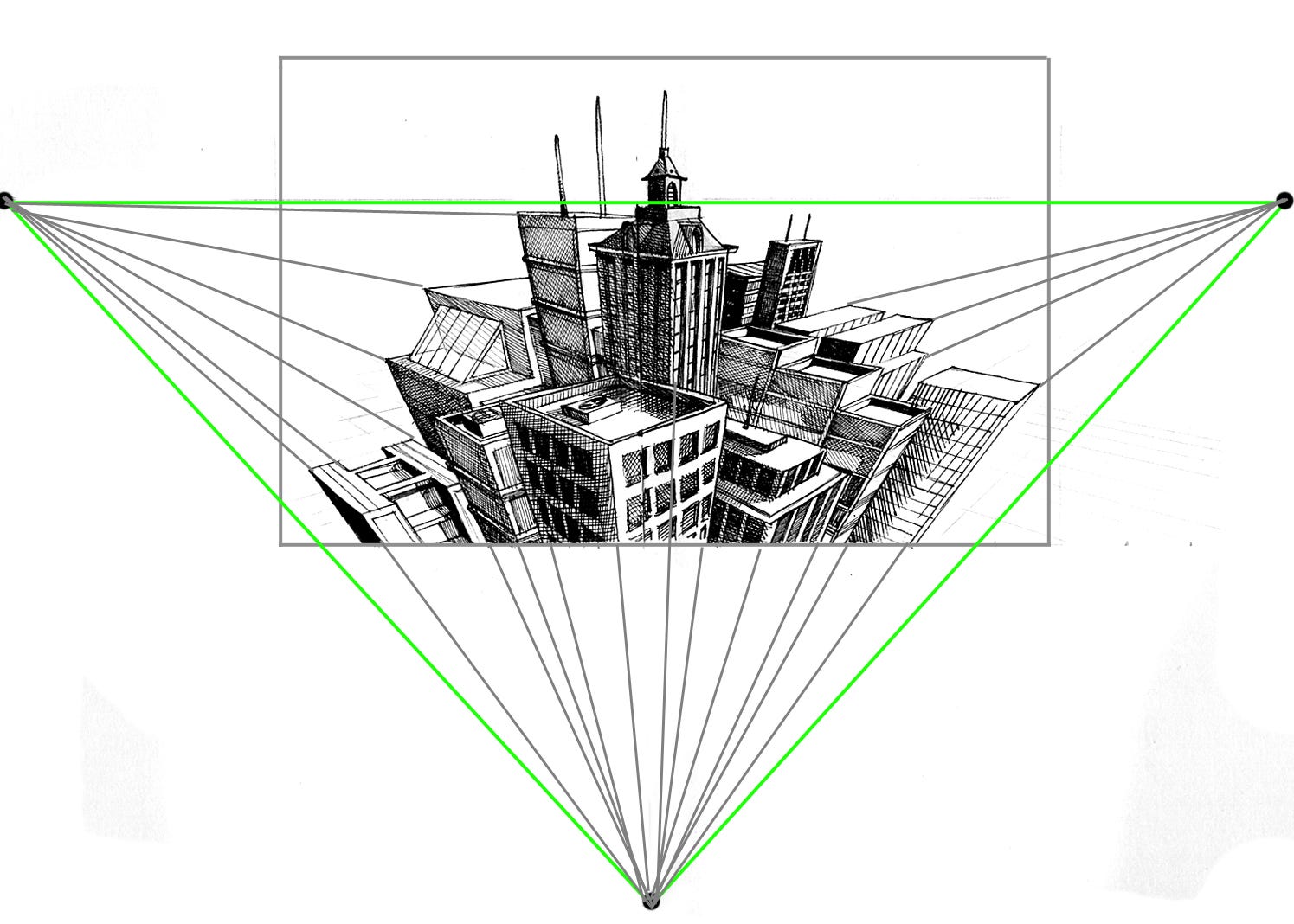
Two point perspective is a simple way of drawing objects in space. You draw a horizon line and pick to points (preferably as far apart as possible) and draw a series of lines that all begin at those points and intersect in the middle to create the object. In two point perspective, all the vertical lines are straight up and down, unless you introduce an angled component like you see in the back of the chair in the drawing above. Three point perspective connects the vertical lines to a third fixed point, but I think that’s overkill for a sketch. I pulled this image off https://www.craftsy.com/post/three-point-perspective, if you want to check out more on three point perspective.
Here is a quick tutorial on how I use two point perspective. You can see the blue lines terminating at points along the horizon line. The “board” is going to be a seat blank.
Keep reading with a 7-day free trial
Subscribe to Peter Galbert's Chair Notes to keep reading this post and get 7 days of free access to the full post archives.