
Big Hand Planing

This might seem like a bit of a departure from my usual fare, but if you stick with me, I think you’ll see the connection. I’m plastering my walls at the house with a veneer over “blue” board plaster base and it’s reignited my passion for plaster.
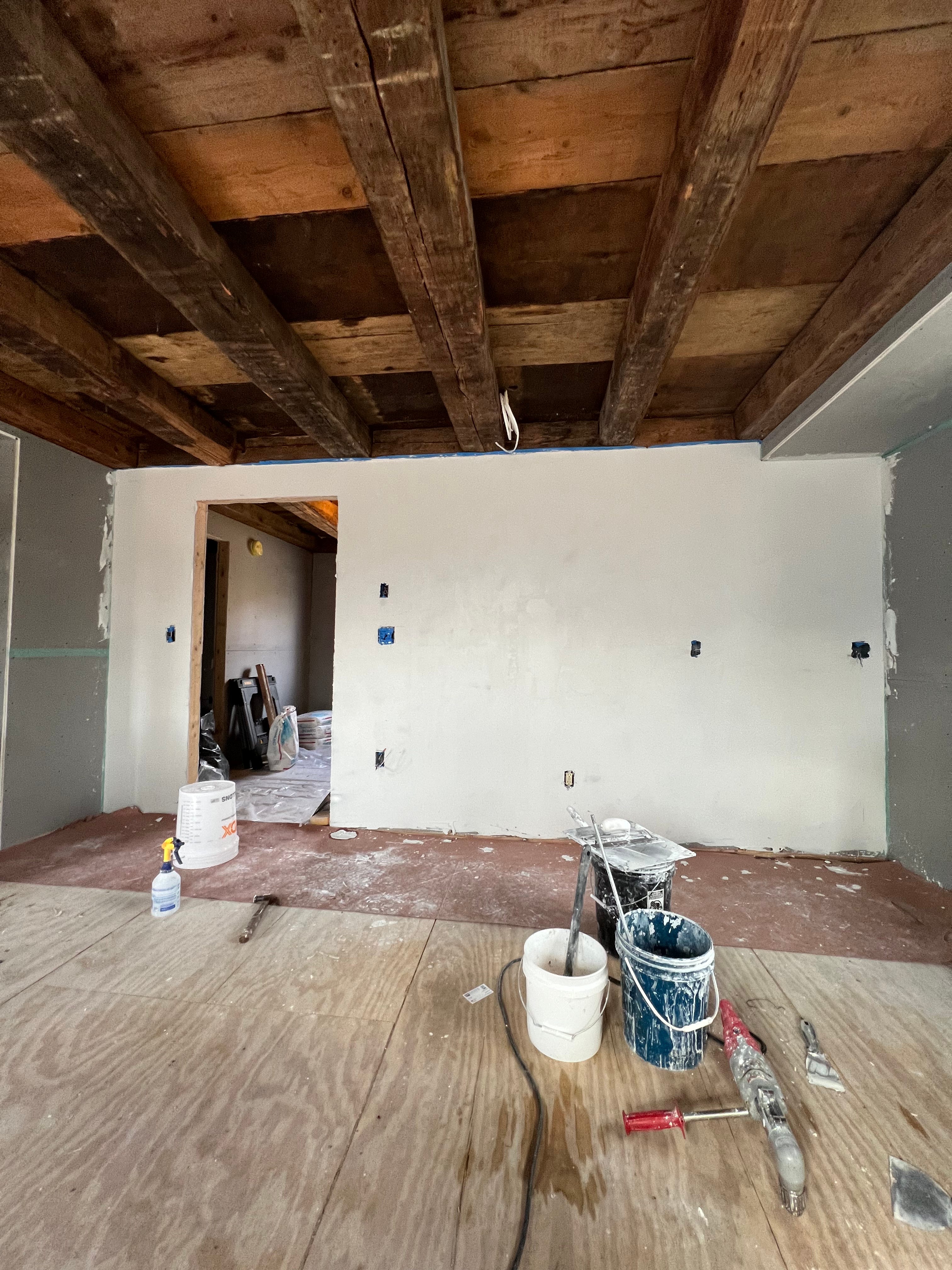
I love plaster. It does what you wish drywall mud would do. You know that “just one more” pass you take when smoothing drywall mud. The one that would make it just perfect, but instead just tears the whole surface up. Well, plaster is a whole different animal that actually loves repeated passes and gets better each time.
I’ve had to explain the difference to enough folks lately between drywall and plaster, that I guess I’d better start there.
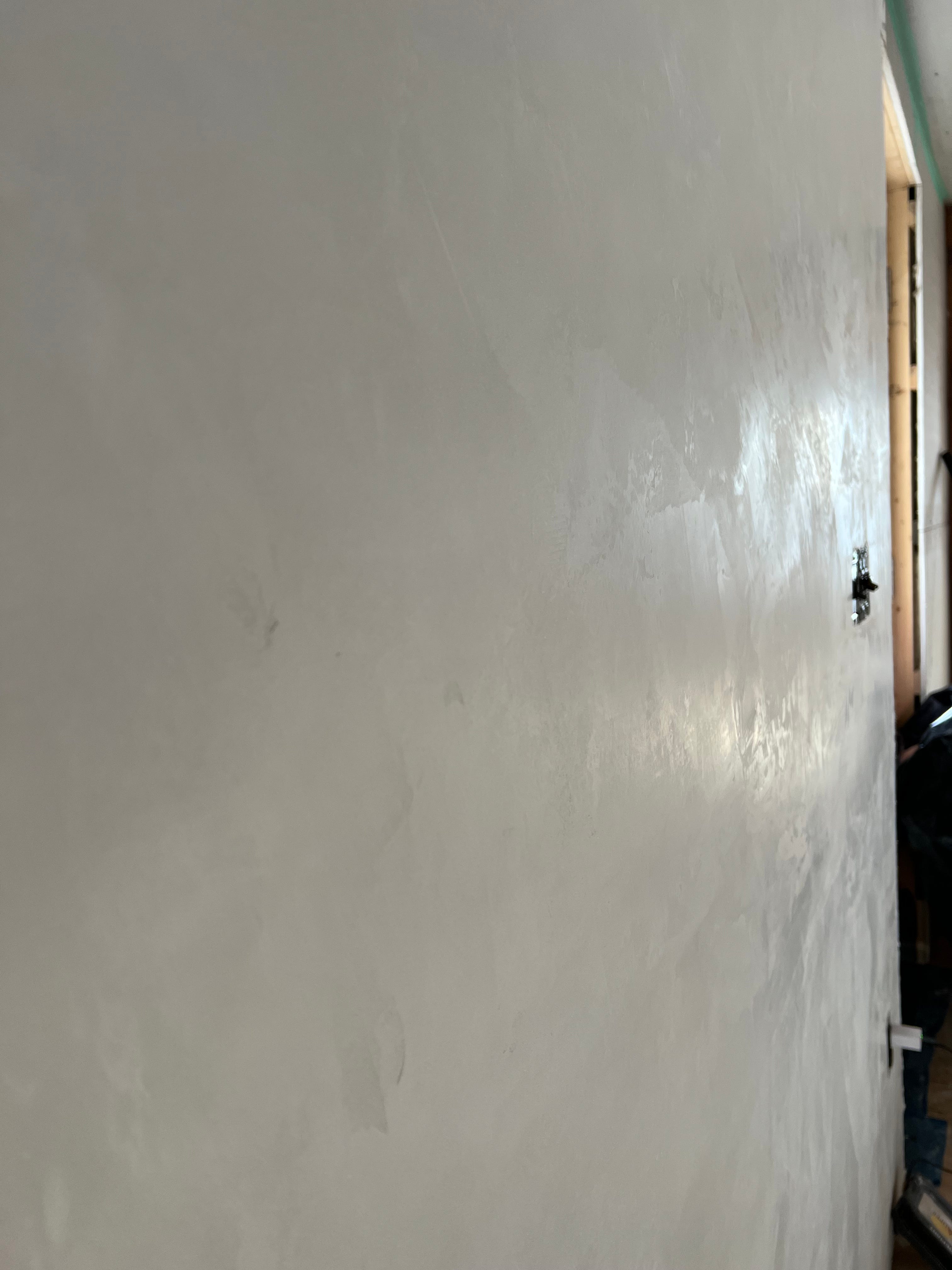
Drywall, is gypsum, which is soft like chalk. But it’s a fast, uniform solution to the old lathe and three coat plaster process. Plaster is lime based and the results are much harder than gypsum. The walls become stone when fully cured, as anyone who has tried to put a tack through one knows.
Drywall panels are joined with a gypsum mud that cures through evaporation, where plaster dries through a chemical reaction. You start with a bucket of plaster and by the end of the application process ,about 45 minutes to an hour, it’s rock hard. It does need time to fully cure, but it’s very hard to the touch.
Drywall mud usually takes a couple of applications with long dry times and sanding. Plaster (veneer) is one and done.
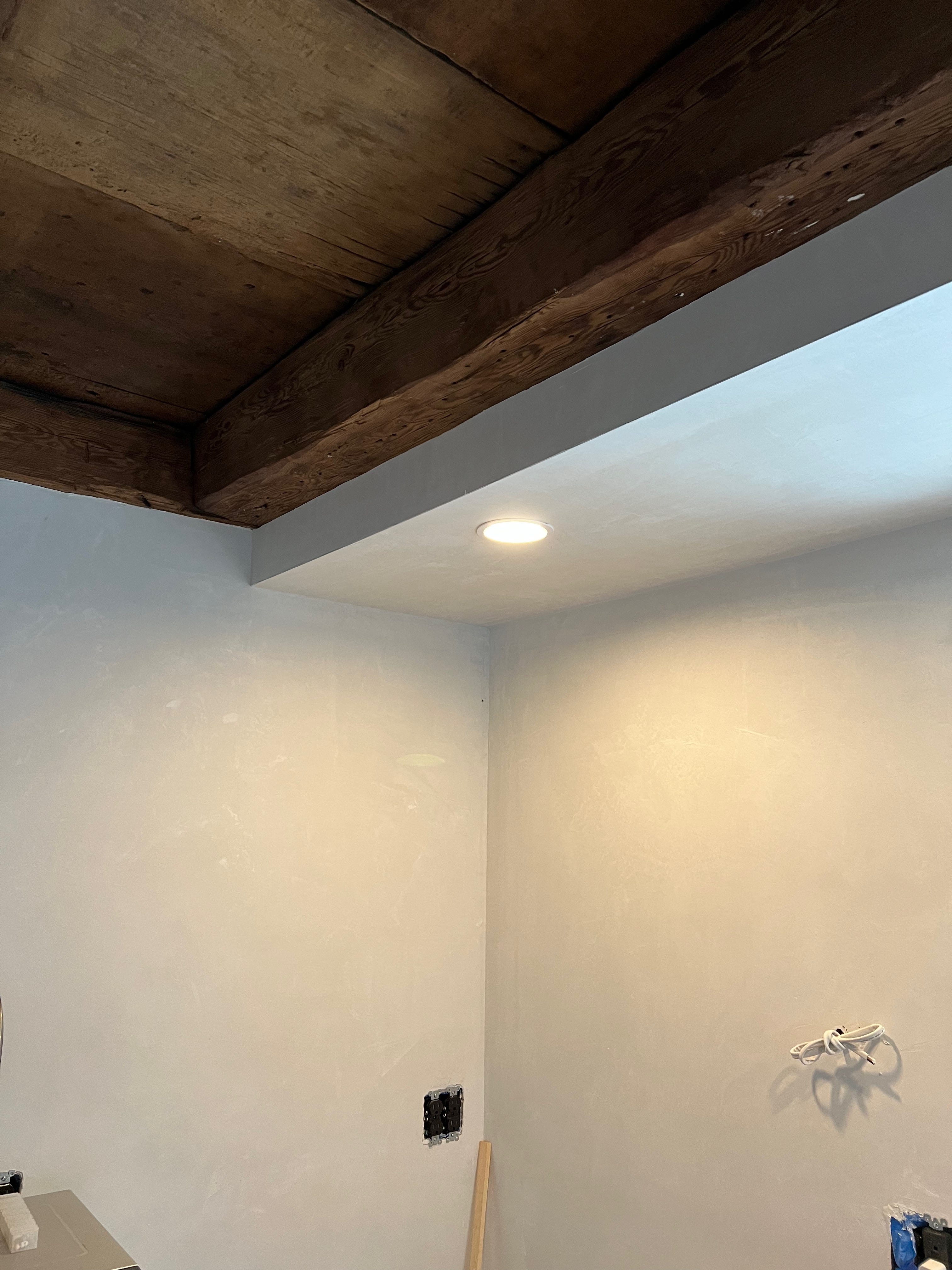
So how is this like handplaning? It’s the same but in reverse. Instead of removing high spots, plastering is a process of filling low spots. Well isn’t this just the same as mudding? No, there is a magic that happens to plaster as you work it.
The first coat goes on like soft cream cheese or a very thick sour cream. Once that coat is troweled on the wall, you immediately do a second pass. And by then, the substrate has drawn moisture from the first coat which makes it much tougher, more like clay. With the still soft fresh plaster from the initial mix, you add more to the surface, filling low spots as you trowel in various directions, just like flattening a board. After two applications, the surface is like leather and you can trowel around with some fresh material and push the existing plaster on the surface around just enough to fill more low spots. The surface becomes much tougher even though the material in the bucket is still soft and fills low spots easily. Once you have applied all the material, you let the surface harden a bit more and then spray a little water to lubricate your trowel and start polishing and filling the remaining gaps and trowel marks. While doing this, a small amount of slurry, called fat, builds up on the trowel and fills small imperfections. Soon, no more fat is raised and you are just burnishing and polishing the surface, which you can do till it shines if you want. Just like any hand made object, the makers marks will be evident with close inspection, but I love the warmth that it adds to a room, especially in my old cranky house where nothing is very uniform. If there’s any interest, I can make a video of the process. Make no mistake, it’s a skill and labor that takes some strength and practice, mostly around handling the loose plaster, but like all skills, once you get decent results, the pursuit of better ones turn the practice into a passion. To me, it’s that same joy I get from planing, as surface starts to become more even and polished off the tool. Hopefully I can encourage you to see the difference and maybe even try it yourself.
I video would be great!! I’m interested in how you acquire and mix the plaster.
Enjoyed the exposition on plastering and it’s relationship to planing wood. Would not have thought of that relationship!
I would note that while restoring our 1863 house and removing multiple layers of wallpaper and paint and wallpaper and more paint I was struck by 2 things. First, the walls had 7+ layers and the ceilings ~5.
Second, once I got down to the original plaster the formal room ceilings were finished with marble dust in the final layer. It was as hard as rock (duh!) and flat and smooth. So flat you’d think it was done by a machine. When scraping off paint and wallpaper I never hit an imperfection.
I’ve done a fair amount of Sheetrock work and I cannot imagine the learning and skill it took to plaster our ceilings. I’m ashamed to say I covered them in a skim coat but the decades of coal dust and kerosene lamp black made it necessary.
Pete, I hope your neck and shoulder muscles are surviving!