
Full Swing
And Some Creativity

I have a few openings in upcoming Turning and Rocking chair classes, check out the schedule here and let me know if you want to join in!
I guess I better get used to it. Follansbee was in last week to teach box making and carving, yesterday the Guild of New Hampshire Furniture Makers were in the shop for a demonstration with me and Tim Manney, and now Eric Goodson is teaching a spring pole lathe and dinnerware carving class. The place is humming and feels great. I’m looking forward to Eric’s class, I haven’t had one like this here and it should be lots of fun. I love watching people do things I haven’t done.
Here are a few shots from Follansbee’s class. He said the students did the best carvings he’s seen in a class. They did look excellent.


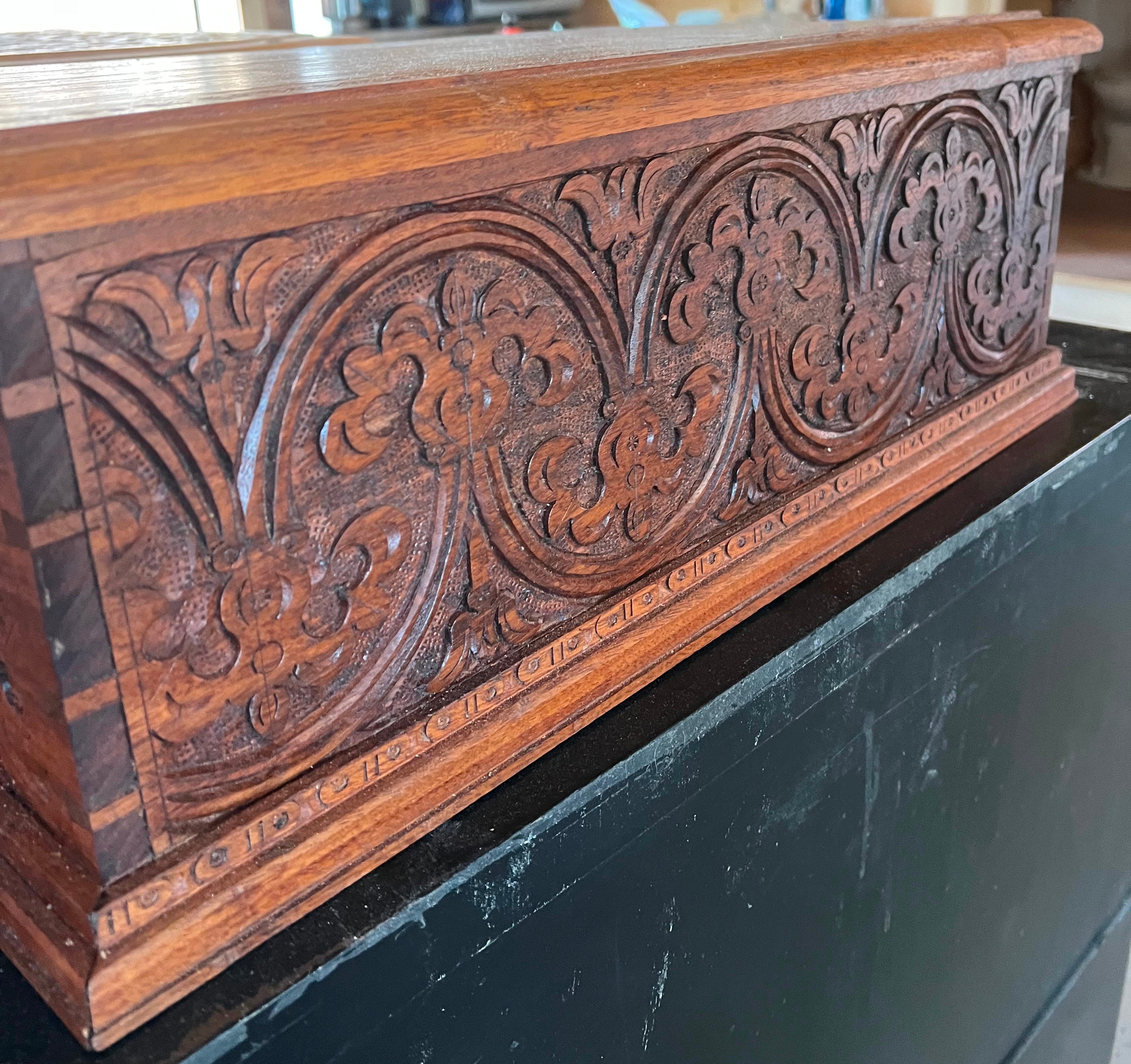
Peter brought in a stunning walnut box he’d made.
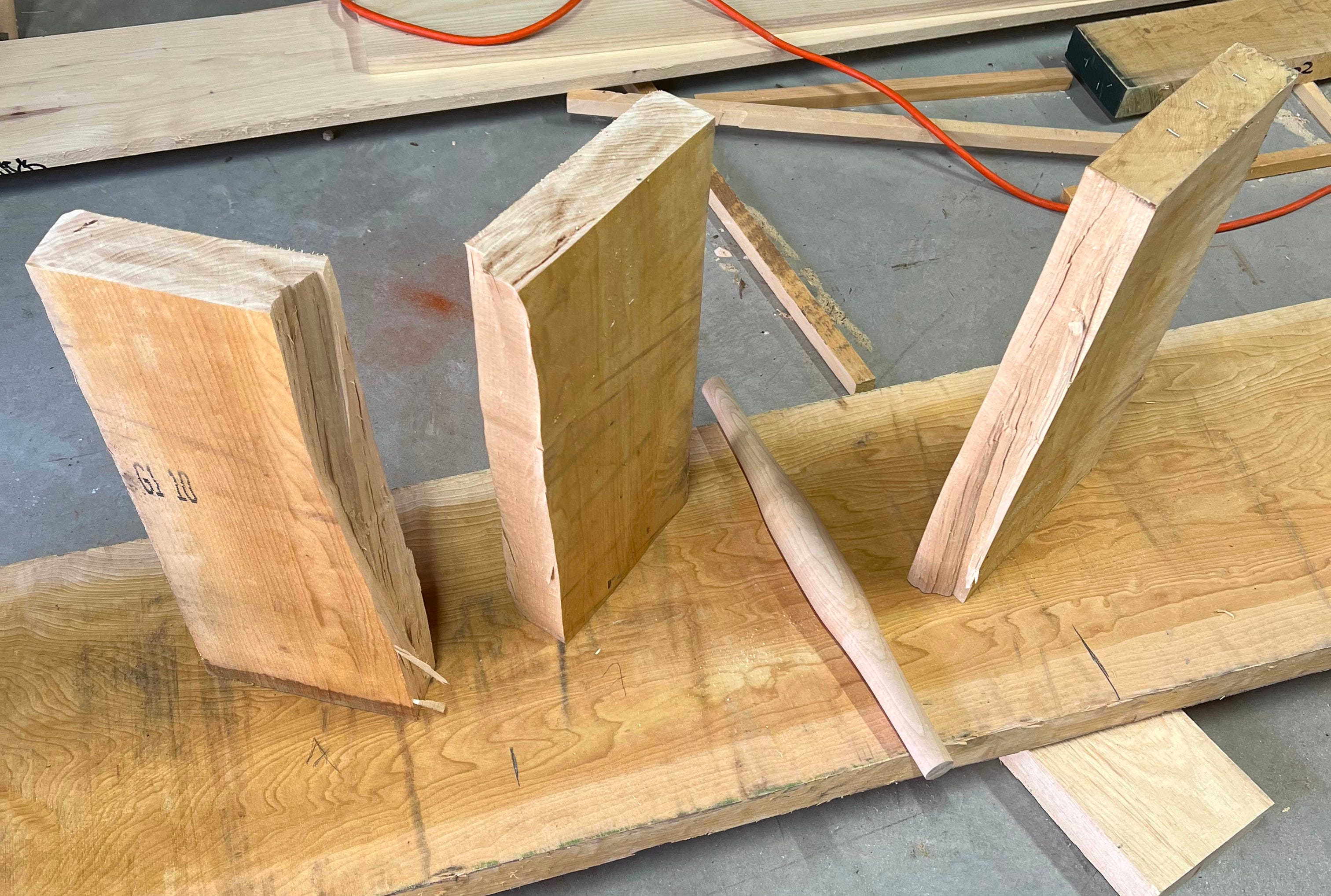
I’m going to be spending the upcoming week prepping for an upcoming Helix class and working on the set of Birdcage side and armchairs. It feels good to get going on these. I can’t find hard maple logs around here right now, so I’m using kiln dried, but luckily there was a sale on it recently and I stocked up. I’m splitting the boards as I showed before and then sawing parallel to the split surface. It’s a joy to turn this stuff.
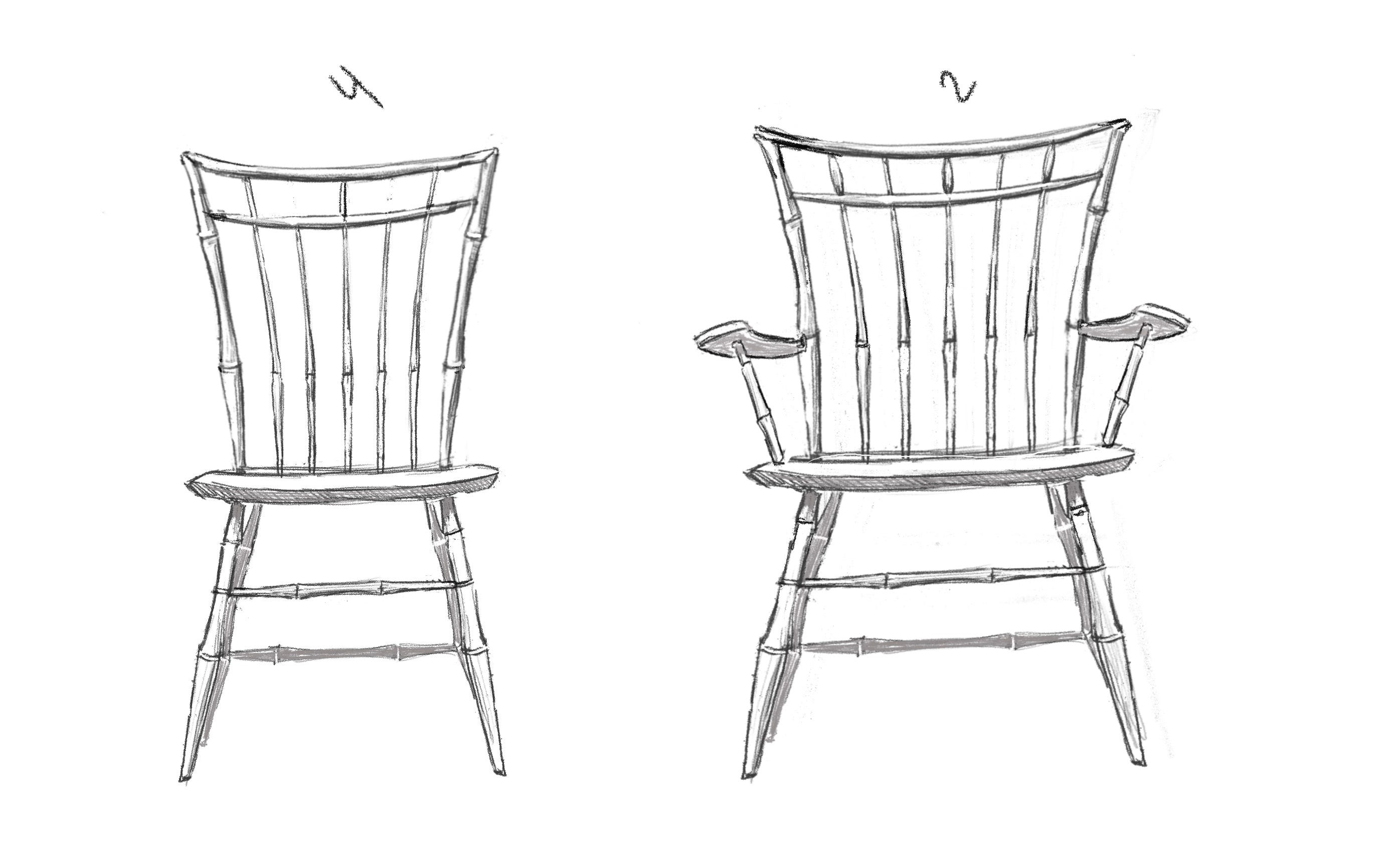
I’m going to be documenting and posting the entire process of my redesign and build of these chairs. I’ve been meaning to revamp my design and this is a great opportunity to share what goes into making a chair from conception and design to finish. Here is a sketch I made of where I’m heading. You might recall that this is the form that first drew my interest into making greenwood chairs.
On the note of design, Chris Schwarz recently wrote a fantastic post on chair design. He’s drawing attention to a pitfall found in lots of chair design, namely exaggerating one detail to the detriment of the balance of the piece. It’s well worth checking out. I’ll try not to fall prey to that one.
I’ve read lots about design and creativity. I’ve been reading this book recently (I can’t remember where I got the recommendation) and it’s turned out to be a very interesting framework. The author also wrote Flow, which you may have heard of and as a woodworker certainly have experienced.
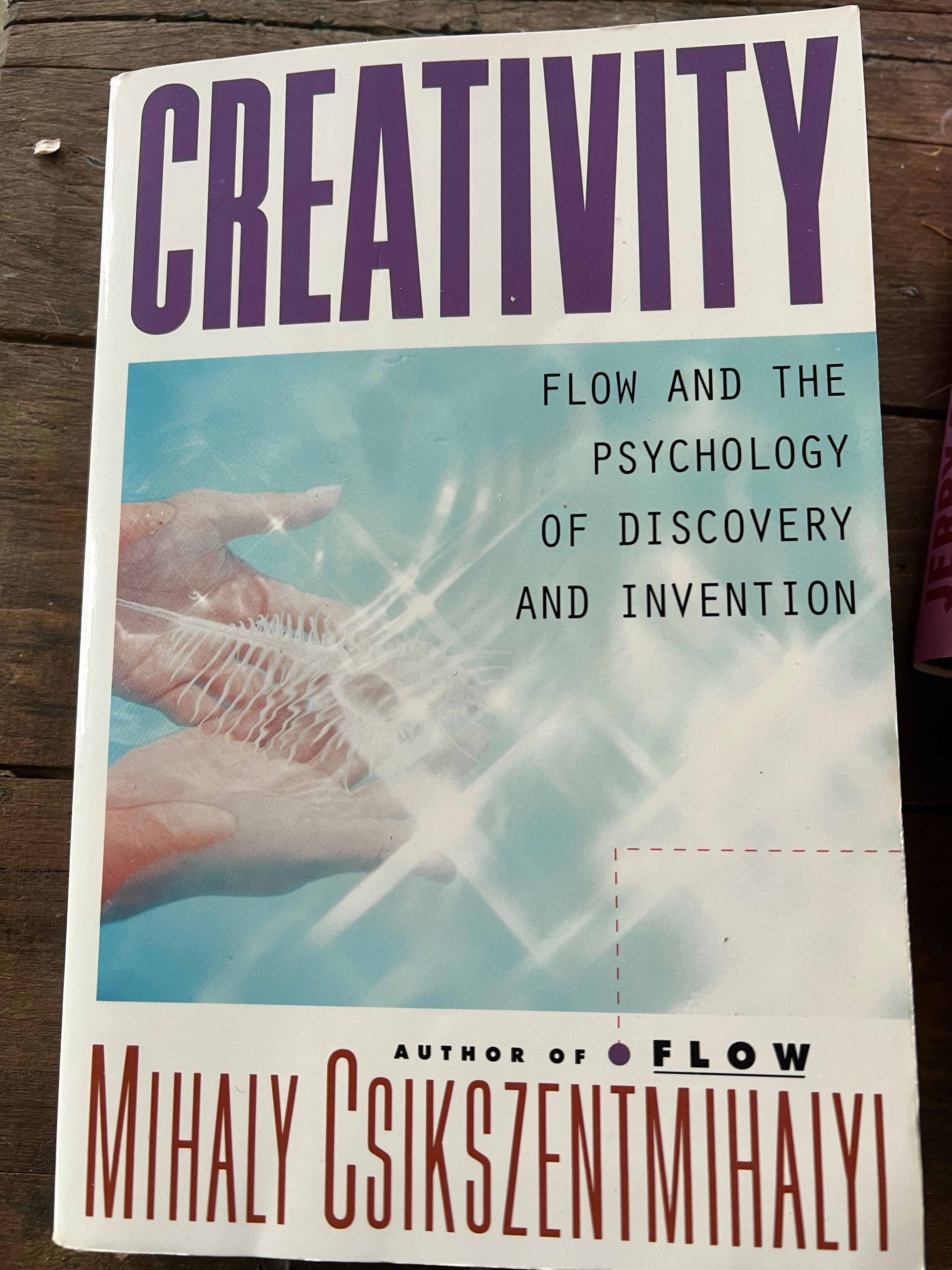
I think it’s easy to believe that creative thinking is like having perfect pitch, either you are born with it or not. But it’s very much a practice, both social and personal. For the book, the author and his grad students interviewed a huge swath of successful creatives in arts, academia, business and science and found many threads that connect their experience. He splits the creative experience into three parts. The domain, which is the field of expertise, such as physics. Anyone pursuing the domain needs to have awareness in what it entails. The second part is the field, these are the people who view or receive the work or participate in the domain and judge the worthiness of the work created. The third is the personal act of the creativity, adding to the domain. I’m sure I’m doing it an injustice in my description, but the fascinating paths of the individuals they interview and the way they add to their specific realm is very illuminating.
Highlighted in the book is of the most interesting concepts I keep going back to in my own work, which is the role of the subconscious in creativity. I often like to think of a piece or problem as I go to sleep, knowing the work doesn’t stop when I’m unconscious. Just staring headlong at a problem isn’t always the best way to solve it. I can prove this to you, and give you a little taste of what it feels like to have your brain reset to new options when you aren’t paying attention. Go the the New York Times and play Spelling Bee. It’s 7 letters that you use to form as many words as you can, always including one of the letters. I play this all the time and I love the viewpoint it provides. I always find a slew of words and then they dry up. I stare at the letters and argue with myself. Part of me convinced the Times finally screwed up and there are no more words to be made and the other part knowing there are, I just can’t see them. Then I close the app and step away for a few hours. When I open it, seemingly out of nowhere, there are a slew of new words, plain as day. Try it, the joy of seeing the new words is fun, but more importantly, become convinced that you can use your mind to process information and ideas differently. I’ll be spending the next few days roughing out parts for 14 chairs, plenty of time for my mind to wander to new places and solve some problems.