
Good Exposure

I don’t know if you noticed, but I do try to keep from glamorizing woodworking. It would be easy to just show the romantic, idealized stuff (you’ve seen this right?). I have two reasons for my concern. One, it doesn’t need it. The work is compelling enough, warts and all. I don’t think it requires vaseline on the lens to make it worth pursuing. Two, I don’t want to lure anyone into believing that it’s some easy, all joy way of life that entices them to quit their day job or feel like crap because it isn’t all transcendent.
Every time I lugged full garbage barrels to the dumptser at the mill shop in Rollinsford, I thought, “I should have a photo shoot of doing this”. A dusty, worn out dude hanging out by the dumpster. That has been as much of my woodworking story as cutting joinery in a sun dappled workshop. Yes, I get those moments, but the whole story is much less photogenic. The job is labor, whether it’s emails, cleaning or log splitting, I hope to convey the whole experience.
I’m telling you this because I have some polished stuff to show you and I don’t want you to get the wrong impression. I have learned that it’s important to take good photos and document and share what I do. Honestly, it’s not my natural instinct. I shrink a bit at the thought of exposure. I usually just want to deliver the piece, hope the client likes it and get on to the next thing. I tell this to people and they often seem surprised, probably because I’ve had a pretty public career and have been at it a while. But when I make things, I try to push myself into new places and doing it publicly is adds to the challenge.
Here are a couple of pieces I just delivered and one I am shipping off this week. I set up a quick photo shoot in hopes of getting one good image of each. One in the “studio” and one in the final destination. Here is the Helix chair
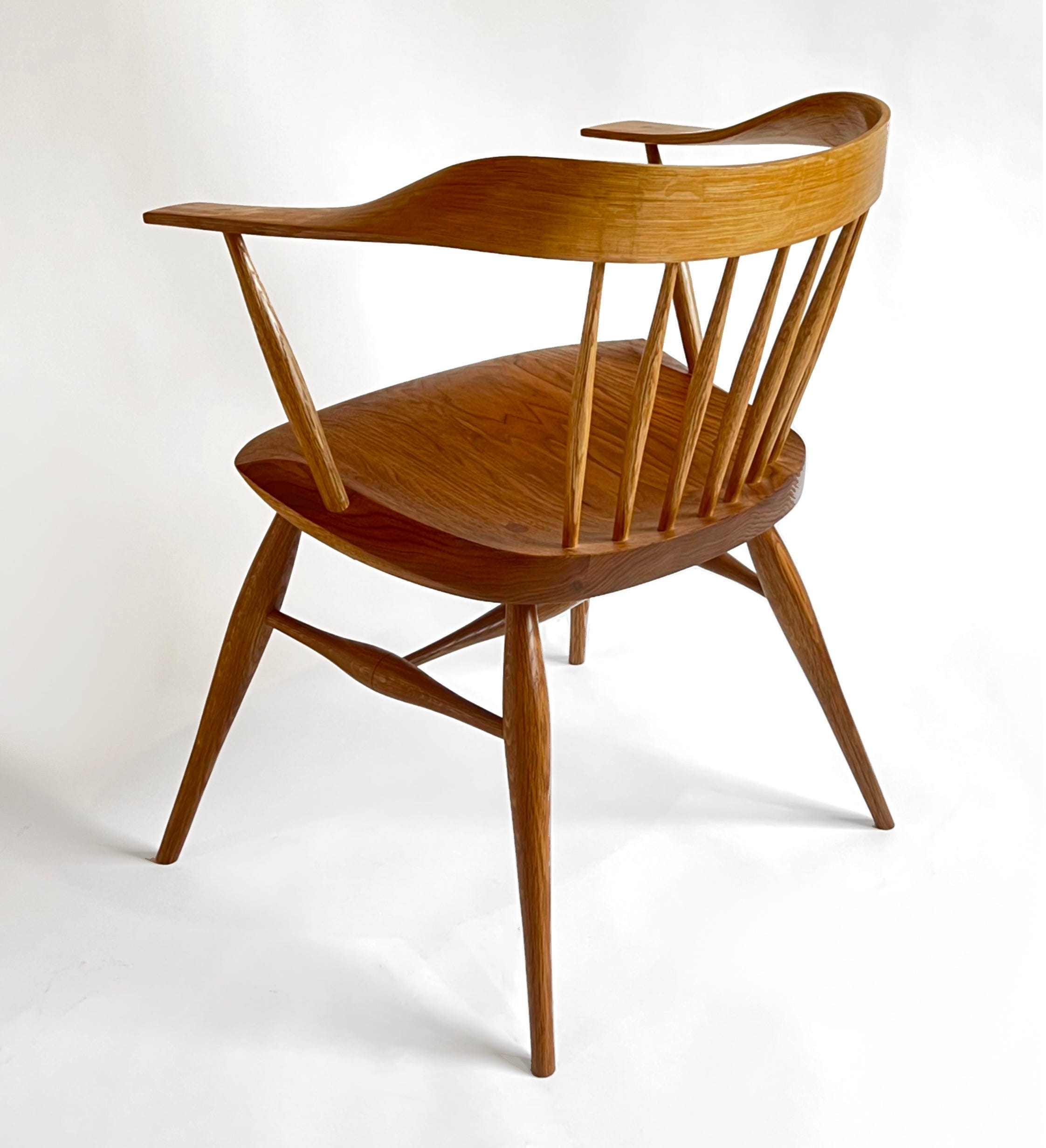
I know you’ve heard me ranting about the light here in Maine, well, this was shot with all natural light. Here is the set up I used. It was an overcast day so the light was even.
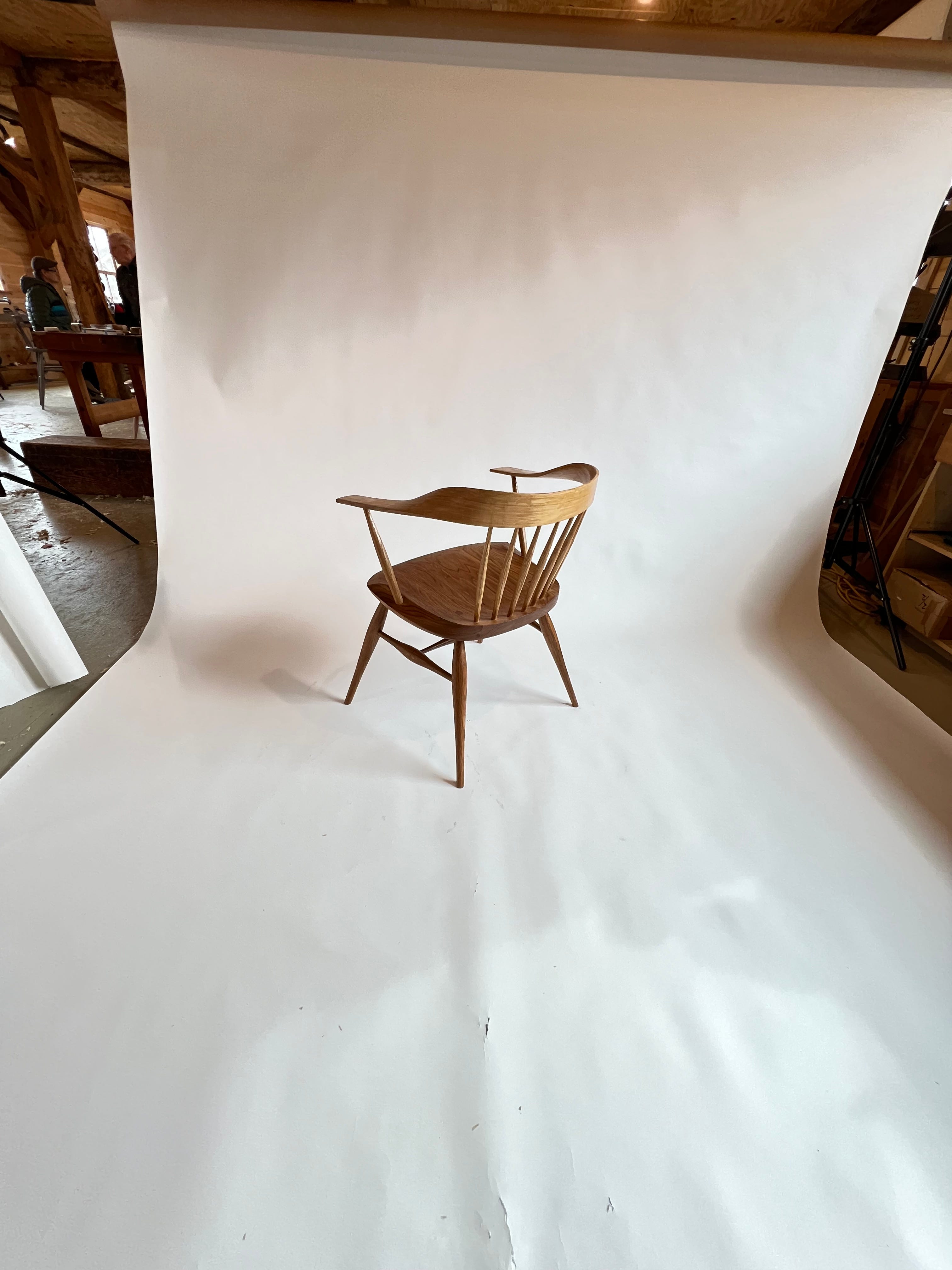
I plan on making a more permanent set up for photography, but this worked out well. Once I had the shot I wanted, I used procreate to select the white background, lighten it and reduce the saturation. I like the effect of still seeing shadows rather than just having the chair float on a white background.
Here is the other chair. This one was harder to shoot that day so I waited until I got a shot in it’s final home. I like seeing it in it’s environment. Furniture needs to be able to interplay with it’s environment. Without considering this, it’s easy to make a piece with wild gesticulations that can’t live in a space without dominating it.
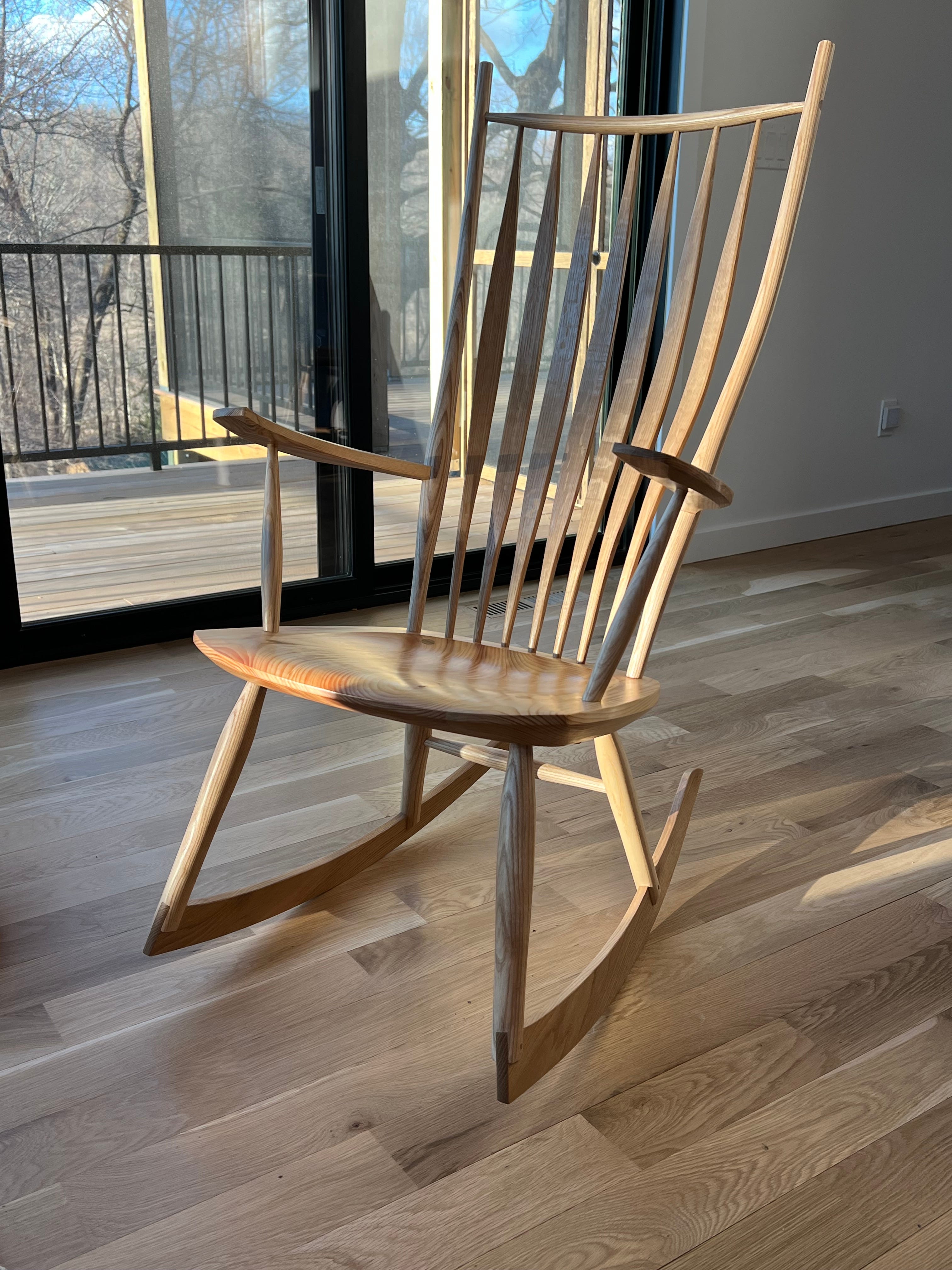
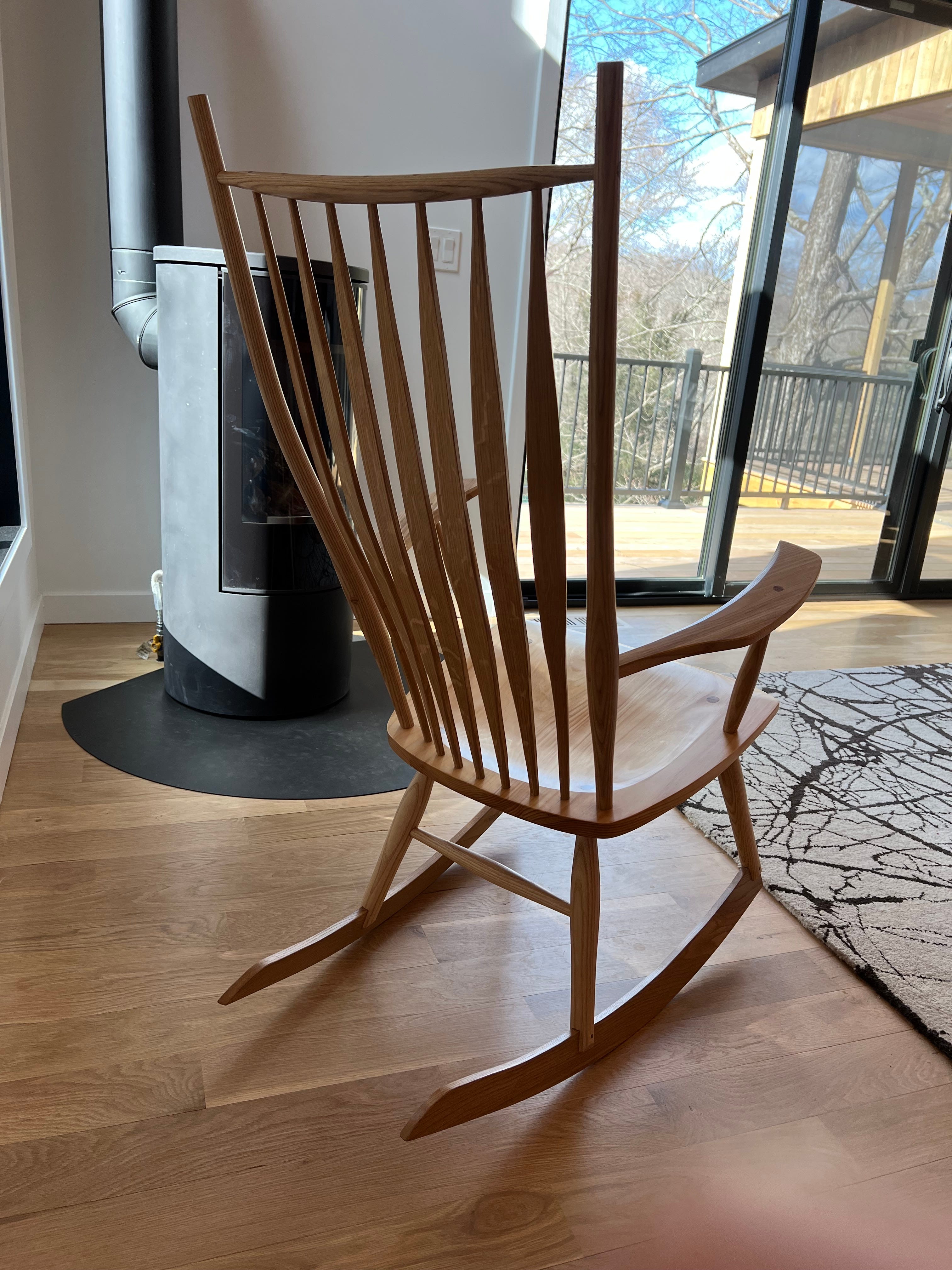
Here are few detail shots.


For the finish on this, I did some new things. I wanted to keep the ash clean and blonde in tone. So I sealed it with shellac. Then I finished it with multiple coats of hard wax oil (Saicos brand high gloss, then satin). For the seat, I wanted more of the pines rich tones, so I finished it with two coats of Tru oil and then two coats of the hard wax oil. I really like the interplay of a hard seal coat (shellac or Varnish) with the hard wax oil. Often, I find the hard coats can look a bit too shiny and uneven, especially on woods that have variable absorption. But a couple of coats of the hard wax oil evens out the sheen, gives a nice feel and leaves the wood protected, but seeming sort of naked feeling.
I guess I’m still more comfortable with the wood being the exposed part.
I feel so fortunate that you decided to be public enough to teach us on soany ways. I will always be a grateful recipient of all you give us?
One of my favourite details on any windsor chair is the wedged tenon. In particular, i love it when the wedge slightly “breaches” the outer radius of the tenon. It gently states that this chair is human-made.