
The Push and Pull (Unlocked)

This week I’m building the Helix chair with 7 intrepid chair makers. I am unlocking this post showing the bending process and a bit more about the chair.
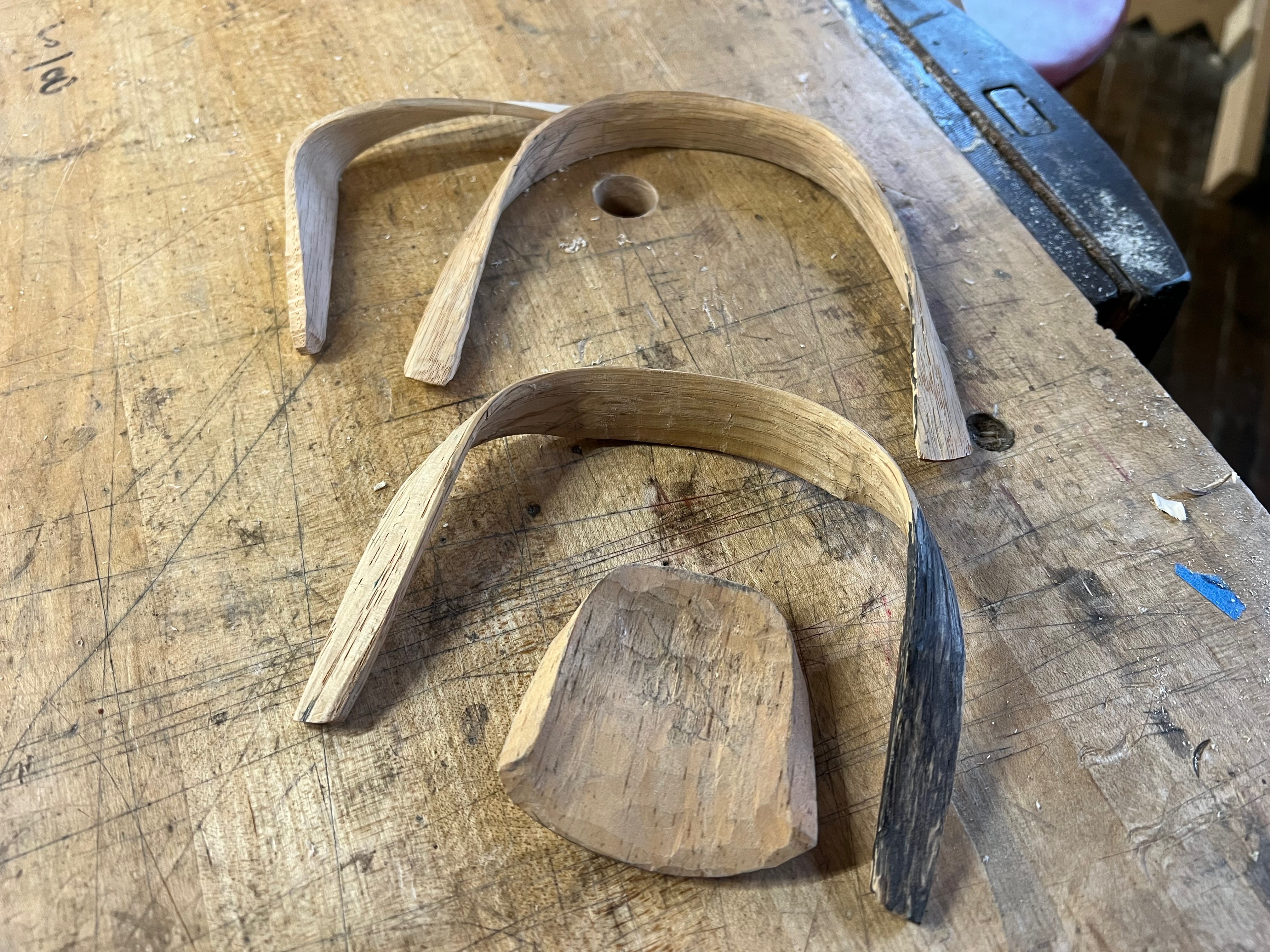
I dug into my pile of wood and pulled out some premium white oak I’ve been saving for the challenging bends. I love this chair. It feels like a chair that could only have happened because of all the years I spent splitting and bending wood for other chairs. Here are a few of the models I made while mulling over the design.
If you are unfamiliar, here is the chair.
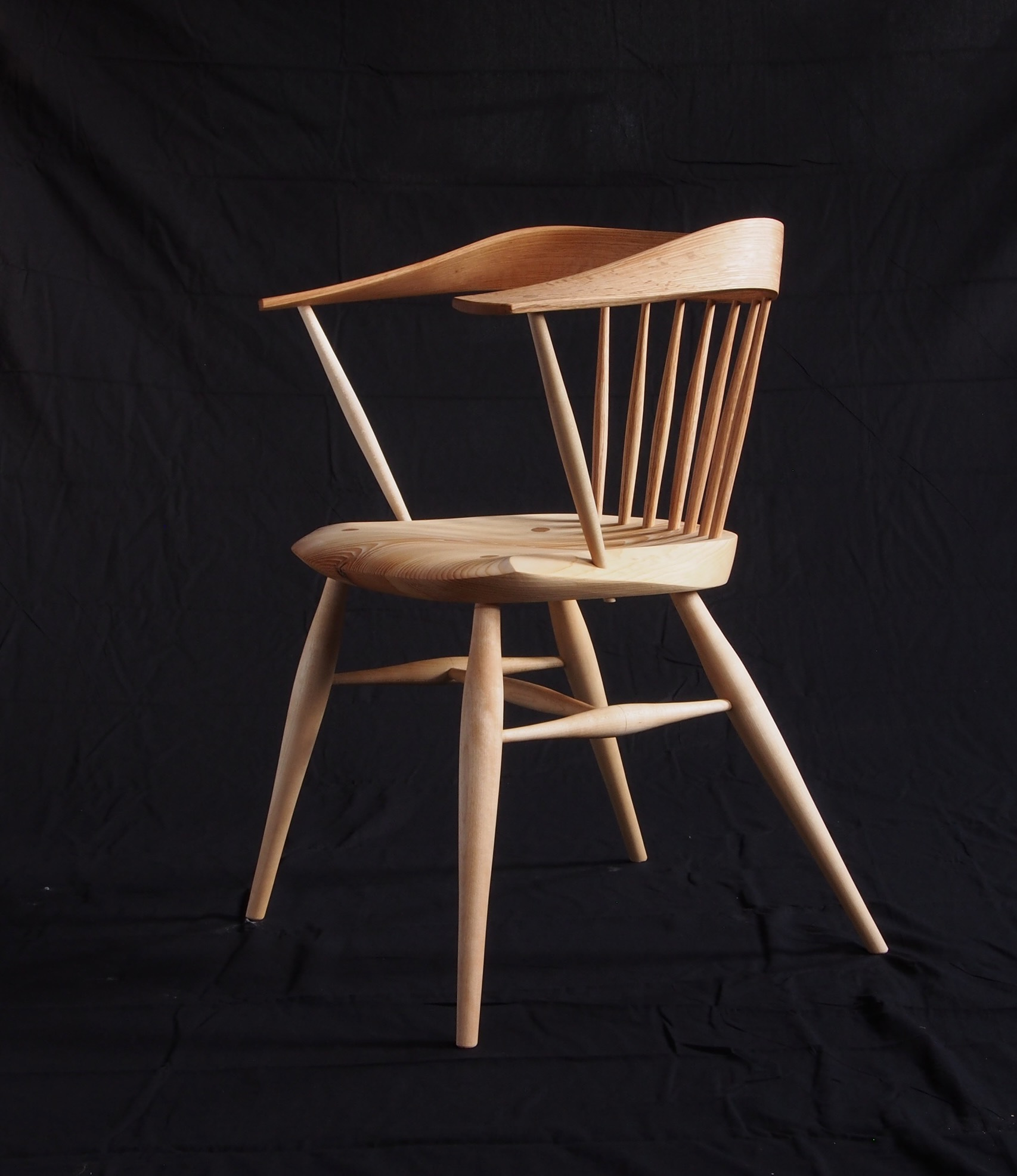
This was an early version, I’ve increased the twist in the arm, flattening it out and providing more comfort. Of course, this added challenges to creating the bend, but after lots of effort, I’ve got the sequence of shaping, clamping and bending down to very predictable results. Here is a video of the bend in action.
This was a rather uncoordinated bend, I did it while the class was in motion and I forgot to break down some of the parts from the previous bend. Oh well, the results were great. (This was in the old shop)
It’s definitely a bit of a wrestling match to get the bend, it doesn’t want to make the shape, though in the end, the shape of the form and the part make it possible. The sequence of clamping turned out to be a key to the success of the bend. Too much stress on the wrong spot when making the twist would crack the arm along the growth rings. By starting the twist at the end of the arm, the twist occurs without too much localized stress. I’ve seen another chair with a similar bend, but it was clearly done with bent lamination. On the bent lam versions, the arm just folds around like it was a napkin. I didn’t understand why I liked my bend so much until I saw that version. By using solid wood and altering the thickness of the part, there is a resistance to the bend that makes for some lovely curves and a sense of tension. The resistance to the bend is visible and, to me, makes for a more interesting form.
Here are some shot of of the bends. It’s tough to capture in still images, I’ll post more photos of the finished chairs.


The upward bend of the back is a result of the twisting and the angle on the back of the form.
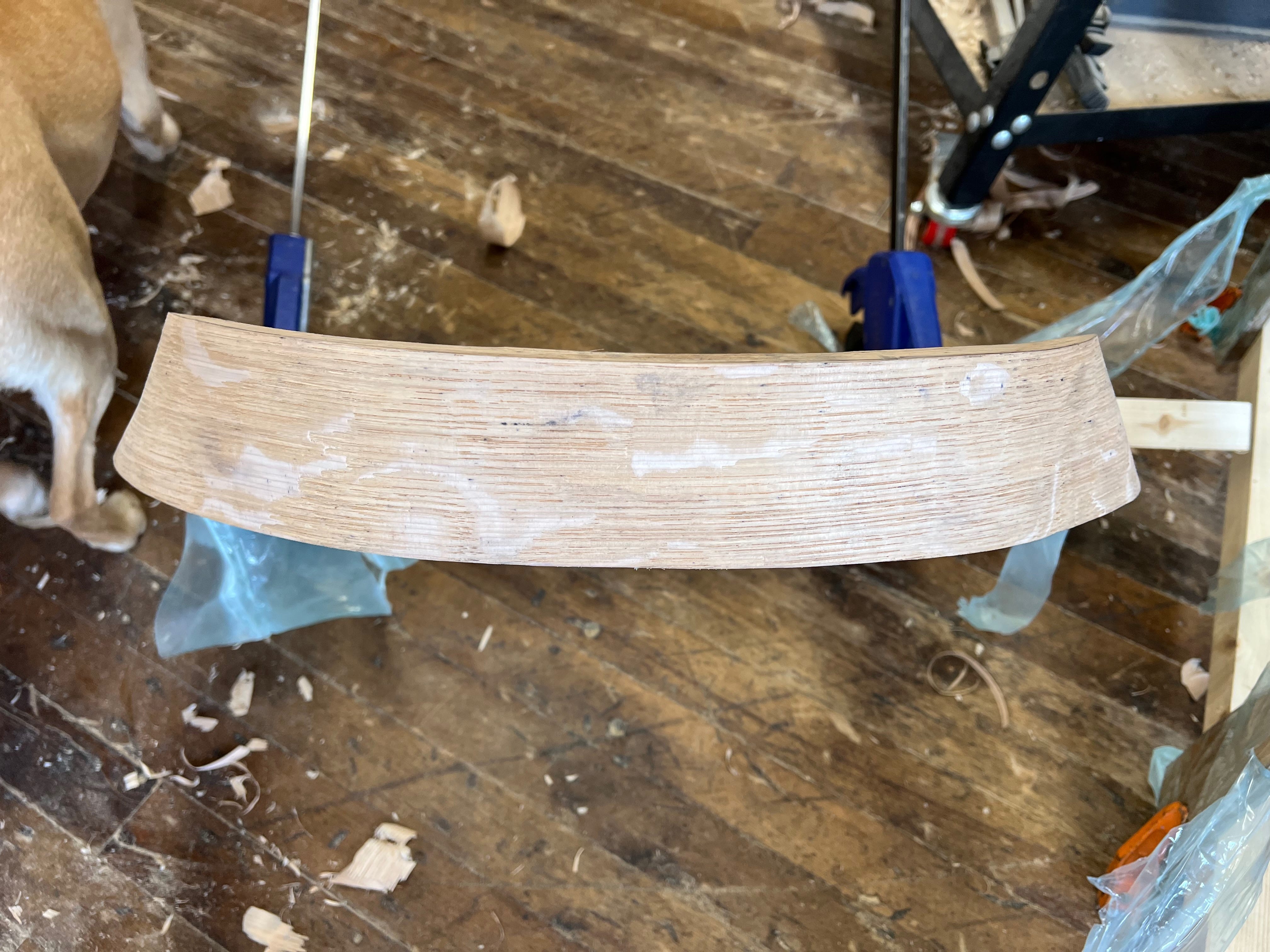
Pushing the material like this (and often failing) is right in line with my interest in woodworking. The end result was more of a conversation between what the wood could do and the requirements of the chair. I certainly never felt like I was dominating the material, The wood definitely had it’s say in the end result and as it resisted, made for a much more interesting form than I could have sat down and drawn from my imagination.
Here are the class bends in their drying forms.
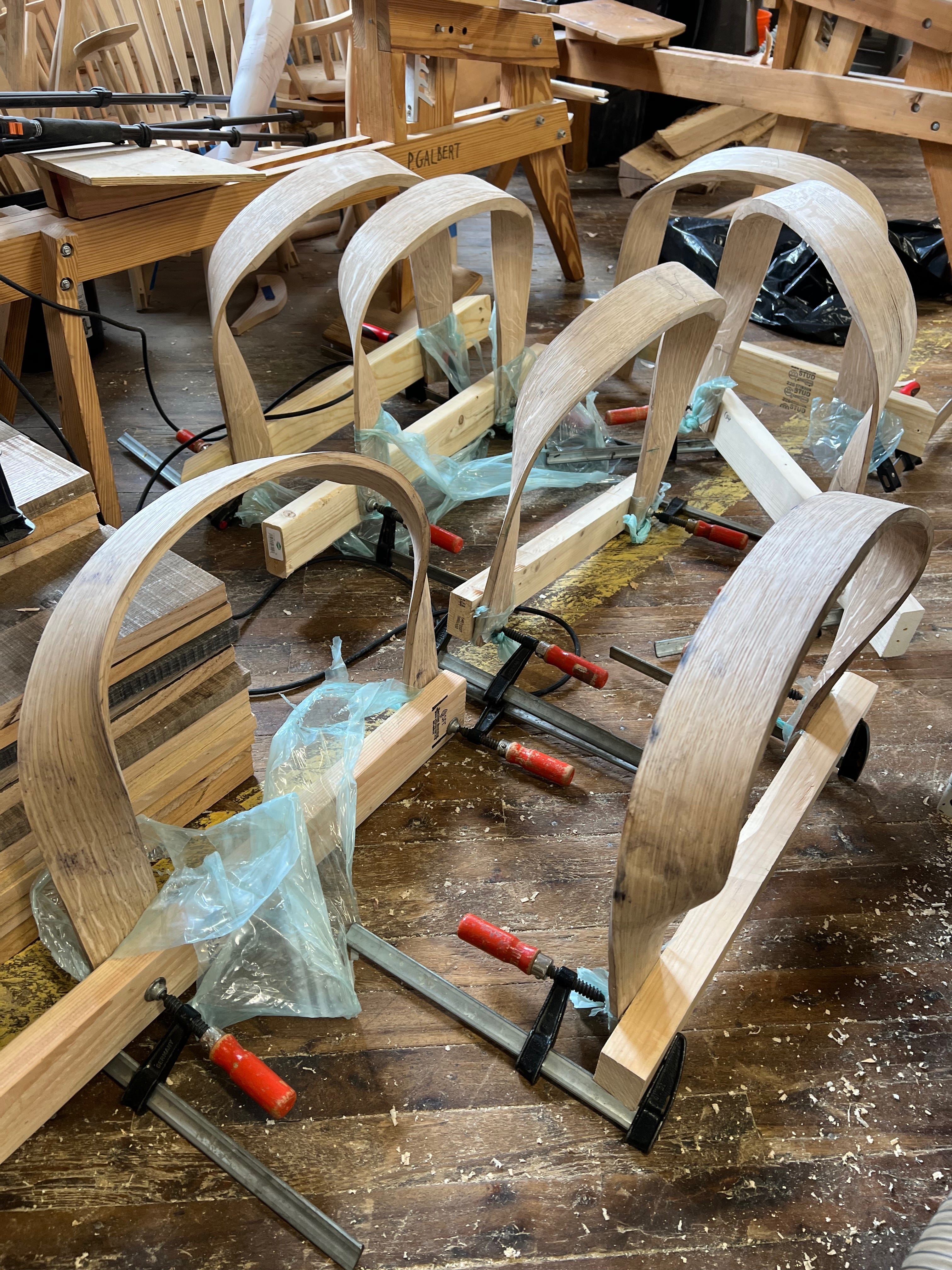
I know this bends baffles most folks as a chair part. I often hear the response that they couldn’t imagine how it would fit their body until they sit in it. I’m going to make some for my own kitchen table, it’s my favorite armchair. Tomorrow we dive into the seat, which sort of mirrors the arm bend in the way it’s shaped. Once I had the arm bend, the seat almost designed itself.